


Decision Support System
For River Management
About DSS WRM
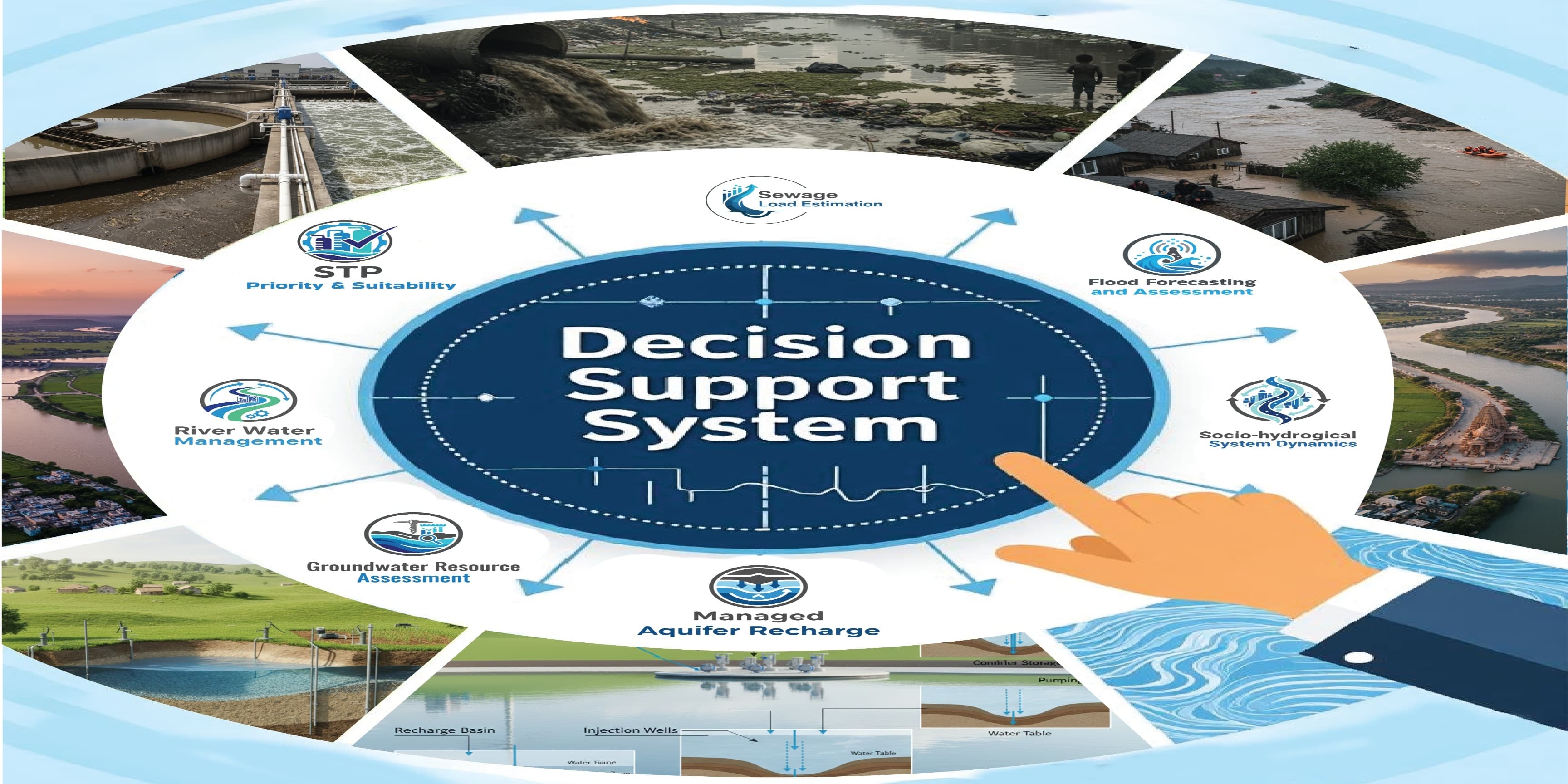
The first major project of SLCR is the development of a comprehensive Decision Support System (DSS) for river management. This system is designed to provide a holistic framework for monitoring, analyzing, and managing river water quality. The DSS integrates data from various sources, including real-time water quality sensors, hydrological measurements, and environmental monitoring systems.
It employs advanced data analytics and modeling techniques to predict water quality trends, identify pollution sources, and evaluate the effectiveness of various remediation strategies.
DSS Framework
Robust Data Infrastructure
The DSS framework is built on a robust data infrastructure that collects and processes information from multiple monitoring stations along the Varuna River. These stations are equipped with sensors that measure key water quality parameters such as dissolved oxygen, pH, temperature, turbidity, and the presence of various pollutants.
Real-time Analysis
The data is transmitted in real-time to a central database, where it is analyzed using machine learning algorithms and hydrological models. This allows for the early detection of pollution events and the identification of their sources, enabling timely intervention.
Alerts & Recommendations
The DSS provides visualizations such as maps, graphs, and dashboards that display the current status of the river and historical trends. It also generates alerts and recommendations for action based on predefined thresholds and predictive models.
Scalable & Adaptable
The DSS framework is designed to be scalable and adaptable to other rivers in India and beyond. It can be customized to suit the specific needs and conditions of different river basins. The system also incorporates a knowledge management component for sharing best practices.
Scientific Foundation for SLCR
Critical component enabling evidence-based decision making
The DSS project is a critical component of the SLCR initiative. It provides the scientific foundation for the other projects and ensures that the solutions developed are based on a deep understanding of the river system. The knowledge generated by this project can be used to inform policy decisions, guide the implementation of interventions, and monitor the long-term effectiveness of river rejuvenation efforts.